

LevelUpSkillz · Practical family systems
Mom Burnout vs. Overstimulation: How to Tell What You Need
Overstimulation is often tied to too much input in the moment; parental burnout is a more persistent pattern linked to parenting demands. They can overlap, and neither can be diagnosed by a quick checklist.
By LevelUpSkillz Editorial Team · Updated

Start with the time pattern, not a label
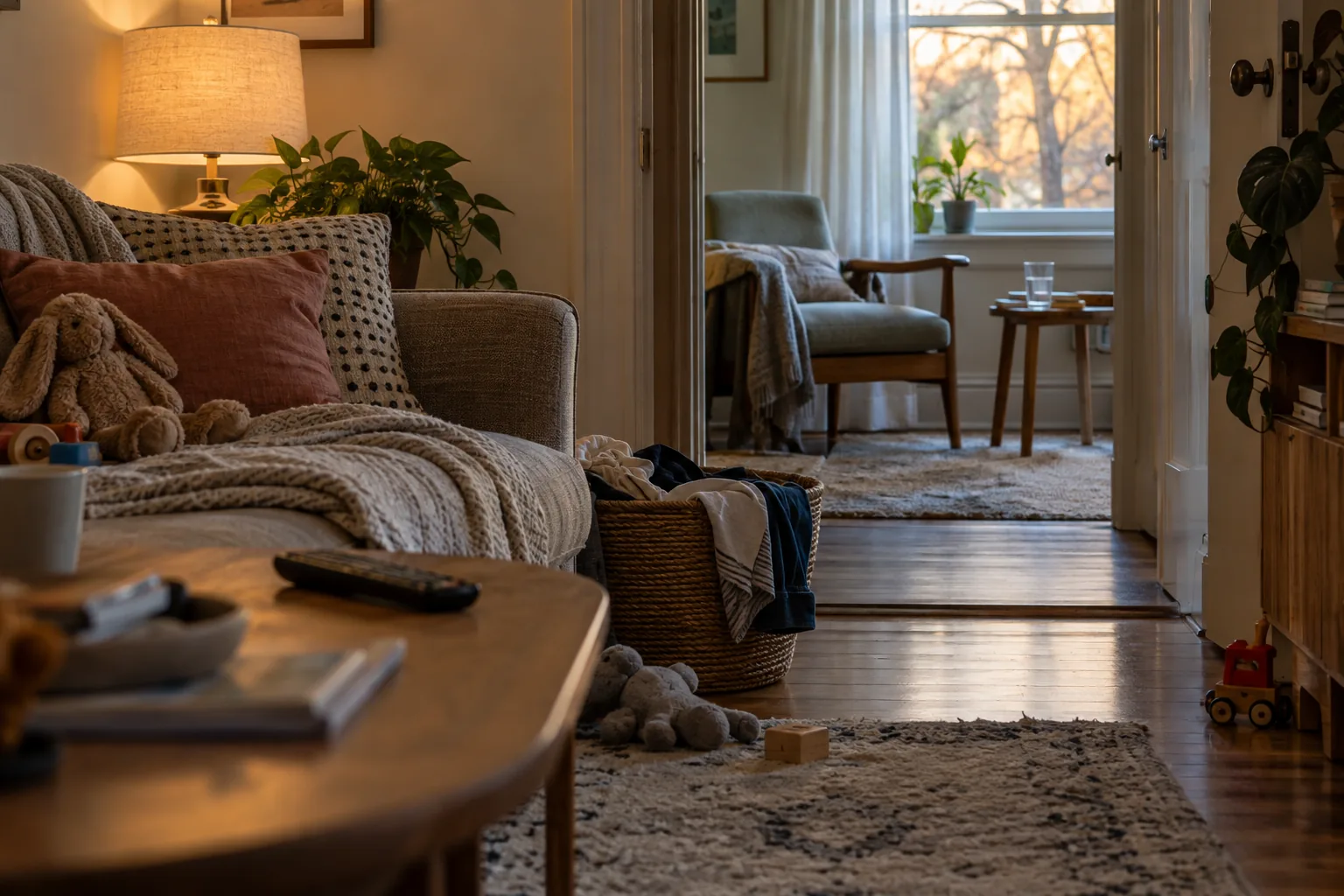
It is 5:30 p.m. The room is noisy, dinner is unfinished and someone has asked three questions in a row. Wanting quiet right now may describe sensory overload. If exhaustion and emotional distance continue across days and situations, one loud evening may not explain the whole experience.
“Overstimulation” is commonly used for feeling overwhelmed by sensory input such as sound, touch or activity. Research on parental burnout describes a broader pattern associated with enduring parenting stress, including exhaustion related to the parental role and emotional distancing. These descriptions are not a way to diagnose yourself. A peer-reviewed study on parental burnout examines the concept and possible consequences; it does not mean every tired parent has burnout.
A practical comparison—not a diagnostic test
When sensory input is the main pressure
- Often linked to
- Noise, touch, interruptions, bright surroundings or several demands at once.
- Time pattern
- May rise quickly in a particular place or moment and ease when input falls and safety is covered.
- First step
- Turn off one avoidable sound, move to a quieter space or ask another capable adult to take over briefly.
When exhaustion has become more persistent
- Often linked to
- A long-running mismatch between parenting demands and the time, energy or support available.
- Time pattern
- May continue beyond one noisy episode; a brief quiet break may not change the larger strain.
- First step
- Reduce recurring demands where possible, seek practical support and consult a qualified professional if symptoms persist or disrupt daily life.
These experiences can overlap. Depression, anxiety, sleep problems, medical conditions, neurodivergence and other circumstances can also affect energy, concentration and tolerance for input. A table cannot distinguish them.
What a survey can—and cannot—tell us
An October 2026 report from Ann & Robert H. Lurie Children's Hospital said 60% of 1,000 surveyed U.S. parents reported sensory overstimulation. The report also found different rates by the age of children in the household. It is a self-reported U.S. survey—not a diagnosis, not a Canadian estimate and not a finding about mothers alone. Read the hospital's report.
The figure can remind parents they are not alone. It cannot tell one person why they feel overwhelmed or what care they need.
If it is happening right now
- Make sure anyone depending on you is safely supervised.
- Remove one source of avoidable sound, light or interruption.
- Ask another capable adult for a defined handoff if available.
- Take a short pause that feels comfortable; do not force a technique that adds pressure.
If strain keeps returning at the same time each day, look beyond the immediate trigger. Could a recurring decision become a routine? Can another adult own a complete responsibility?
The existing guide to why moms get overstimulated focuses on sensory triggers. The Mom Burnout Snapshot is a self-reflection tool, not a diagnosis.
When to ask for professional support
Consider speaking with a qualified health professional when exhaustion, low mood, anxiety, irritability or emotional distance is persistent, severe, worsening or interfering with daily functioning. If you fear you may harm yourself or someone else, seek urgent local help now.